Table of Content
Focus on what matters. BIXO handles the rest!

Project management in healthcare becomes difficult when there is no clear plan to follow. Tasks can get mixed up, deadlines can slip, and you may struggle to decide what to do first. This can make your team stressed and slow down progress.
When this continues, work becomes messy, minor delays become major problems, and the whole project becomes harder than it should be. Teams lose their focus, pressure increases, and important activities do not move forward as planned.
But things can be smoother. With the right project management approach, healthcare teams work more clearly, use resources wisely, and move every stage of the project forward with confidence.
In this blog, you will learn how project management in healthcare works, the main stages involved, the methods you can follow, and the real-life examples that prove how the right approach can lead to results.
What Is Project Management in Healthcare?
Project management in healthcare is the process of planning, organising, and managing tasks to complete healthcare projects in a clear and structured way. It explains how the team works, who does what, and how they move to the next step.
According to industry research, healthcare organisations that use structured project management practices report an average project performance rate of about 77.9% in high‑performing organisations, and structured methods help teams achieve these strong results.
Healthcare project management also helps arrange project steps in the right sequence, create timelines, manage teams, and track how the work progresses from start to finish.
Why Is Project Management Important in Healthcare?
Healthcare projects involve many tasks, teams, and resources. Without proper project management, hospitals can face delays, poor coordination between teams, and disruptions to patient services.
According to the PMI Annual Global Survey on Project Management, the healthcare sector achieves an average project performance rate of around 73.6% when teams apply structured project management practices.
Here are the key reasons why project management is essential:
- Healthcare teams quickly spot delays in system upgrades or equipment setup and take action before these delays affect patient care or hospital operations.
- Following a structured plan allows you to make smart, confident decisions. This keeps your hospital or clinic running smoothly, with no delays in workflow and project deliverables.
- Better communication and teamwork help healthcare teams work together smoothly. Clear roles and communication keep everyone responsible and reduce confusion during the project.
- It helps you manage costs and optimise the use of resources. You can allocate staff, equipment, and budgets efficiently, minimise wasted effort, track spending, and avoid budget overruns.
What Are the Examples of Healthcare Project Management?
Healthcare project management can cover a wide range of activities. It helps teams to plan work effectively, organise resources and ensure that work runs efficiently without delays. To see how this works in real life, here are three common examples explained simply:
Implementing Electronic Health Records (EHR)
Switching from paper files to digital records is a big task, especially in busy hospitals and clinics. With a digital records system, the hospital keeps patient information safely in a single location, and staff can access it quickly whenever needed. Planning the data transfer properly, training staff, and testing the system helps reduce errors and minimise delays in daily work.
Hospital Renovation or Expansion
Planning a hospital upgrade or the addition of new departments is a delicate task. Project managers coordinate construction, equipment installation, and staff schedules. They make sure patients remain comfortable, and emergency services continue without interruption. They maintain clear timelines, manage the budget, and update the team regularly to make sure the project finishes on time.
Vaccination or Public Health Campaigns
Vaccination and public health campaigns require clear planning and coordination to reach large groups of people on time. Teams organise schedules, manage vaccine supplies, set up centres, and assign staff roles to keep everything clear and well organised. They also monitor progress and share accurate information so people know where and when to receive care, which helps avoid confusion and keeps the campaign on schedule.
What Are the Different Project Management Methodologies in Healthcare?
Healthcare projects are different in size and complexity, and teams cannot use the same approach all the time. Some tasks need fixed steps, while others need flexibility. Project management methodologies help healthcare teams choose the right way to plan and manage their work.

Waterfall
In healthcare, Waterfall works best when a project follows a clear order and fixed steps. The team moves forward only after finishing each stage. Hospitals often use this method to build projects, install systems, or upgrade equipment, where changes are infrequent, and plans remain stable. This simplifies the process of monitoring progress and keeping timelines under control.
Agile
Agile suits healthcare projects that change as work progresses. Teams provide small parts of the project, review results often, and adjust plans based on feedback. This method works well for digital health tools, patient portals, and software systems which require regular updates. It helps teams to react quickly without disturbing everyday healthcare activities.
Hybrid
Hybrid fits healthcare projects that combine strict planning with flexible execution. Teams set clear timelines for key tasks and change plans when situations demand it. This approach works well for large projects that involve both technical systems and clinical teams. It gives healthcare organisations better control without limiting adaptability.
What Are the Stages in Healthcare Project Management?
Healthcare projects involve multiple tasks, teams, and resources, so it’s important to follow a clear process to keep everything organised. Each step ensures the team works efficiently without affecting patient care.
The following are the stages of healthcare project management:
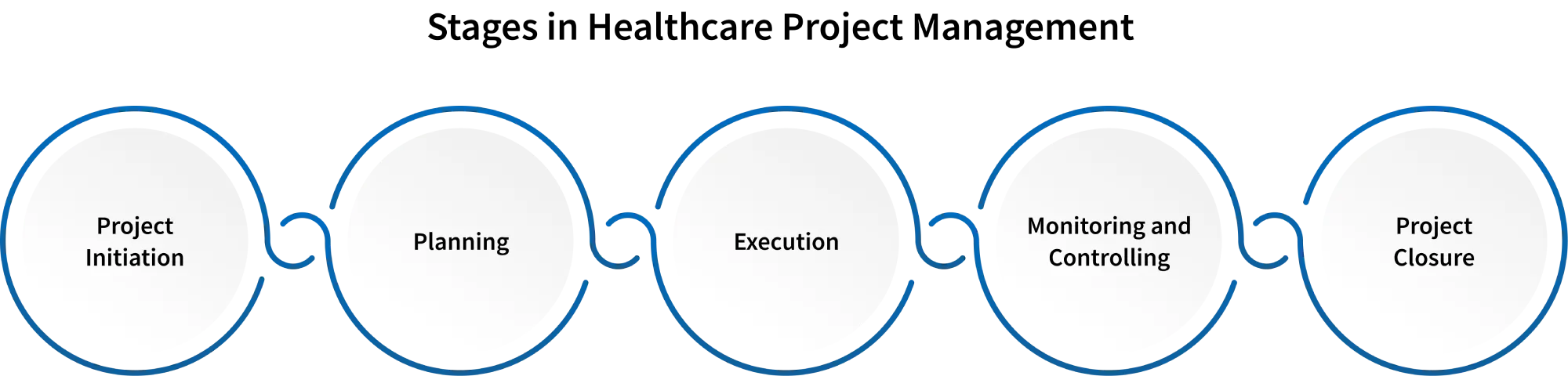
Project Initiation
The project initiation phase is the first stage where a basic healthcare project idea takes shape and becomes a clear goal. During this stage, healthcare teams identify the goals, list the people involved, and decide the resources needed. This helps everyone understand the purpose of the project from the beginning and prevents confusion later by setting clear expectations early.
Planning
After the goals are clear, the next step is to plan the work. Project managers create timelines, assign tasks, and organise staff, equipment, and budgets. Good planning helps the team work without confusion and keeps the project organised. This stage prepares the team for smooth and steady progress.
Execution
This stage is where the actual work takes place. Teams complete their tasks, work together, and handle issues during the process. Daily coordination helps keep the work running without interruptions. Clear communication between healthcare teams helps avoid mistakes during this stage. Teams also make sure patient care continues without any interruptions while the project moves forward.
Monitoring and Controlling
As the project progresses, the team regularly checks the work. They fix any problems quickly to avoid delays. The team monitors timelines, costs, and tasks to make sure they complete everything. By addressing issues early, they prevent minor problems from turning into major headaches.
Project Closure
The team officially closes the project once they complete all tasks. The team reviews the results and notes what worked well and how they can improve. This makes future healthcare projects run more easily. Proper documentation guarantees accountability and provides a reference for similar projects later.
Following clear healthcare project management stages helps your team stay organised and ensures patient care continues smoothly.
How BIXO Can Streamline Healthcare Project Management?
BIXO simplifies healthcare project management by keeping everything organised in one place. You can see project progress clearly, assign tasks easily, and make quick adjustments if delays or issues appear. It also helps you plan resources and communicate with your team easily, so patient care continues smoothly while projects move forward.
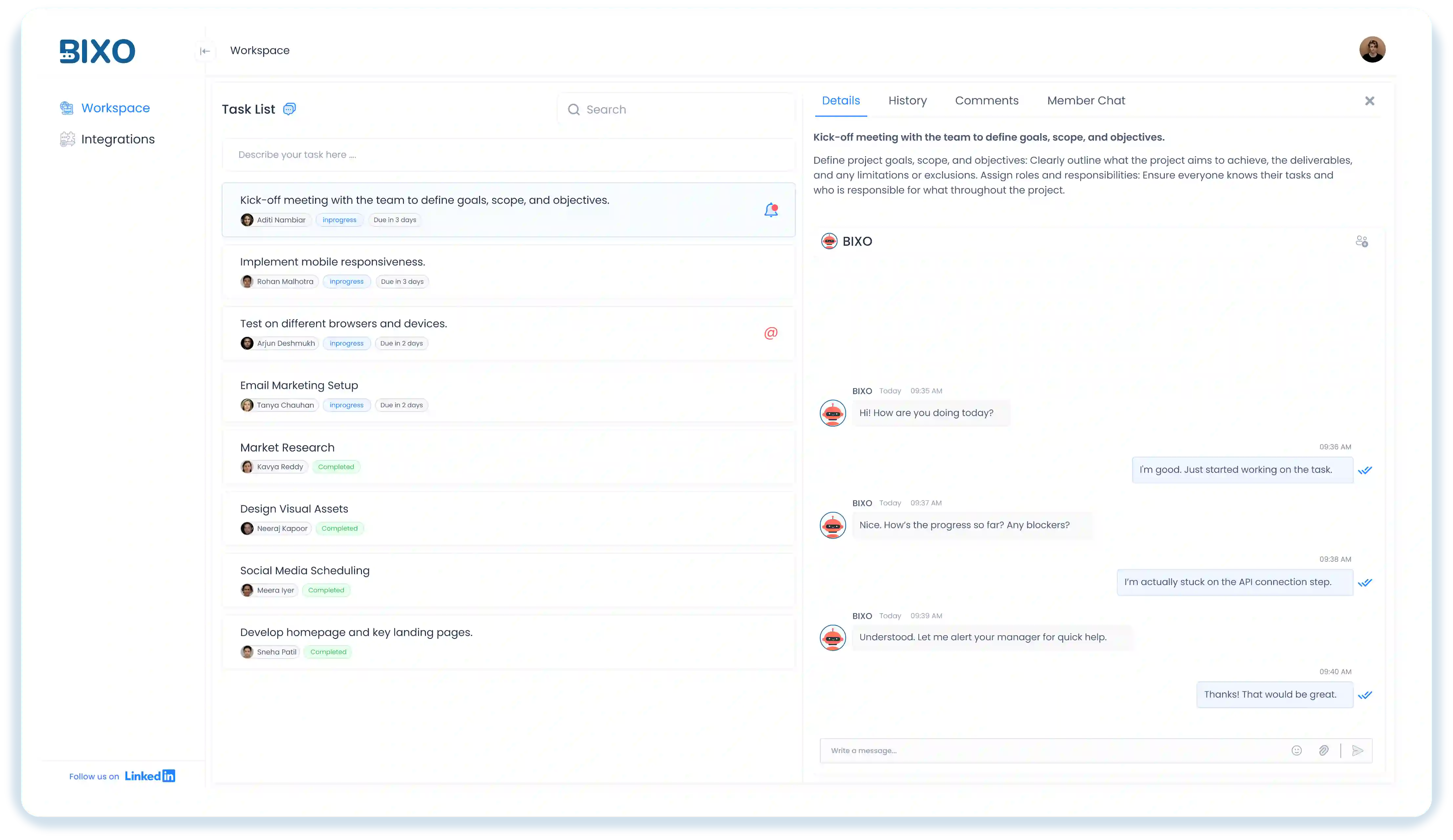
Keyways BIXO supports healthcare projects:
- Track tasks and progress for every team member
- Receive real-time updates to address delays promptly
- Plan and manage staff, equipment, and budgets efficiently
- Keep all project communication in one place to reduce confusion
Conclusion
Managing healthcare projects can be challenging, with numerous elements to handle, including healthcare teams, medical equipment, timelines, and patient services. Following clear project management stages helps teams stay organised, reduce delays, and achieve better results.
Using the right methodologies allows teams to plan tasks effectively, coordinate work smoothly, and make sure patient care continues without interruptions. Clear planning, regular communication, and consistent monitoring make even complex healthcare projects manageable and increase the chances of success.
FAQs
Healthcare teams reduce risks by planning proactively, monitoring progress regularly, maintaining clear communication, and addressing issues quickly as they arise.
Yes. Teams of any size can adapt these project management practices. Smaller healthcare teams improve coordination by defining responsibilities clearly, setting timelines, and tracking progress consistently.
Hospitals actively manage IT system upgrades, facility renovations, vaccination programs, and quality improvement projects with structured management. This approach helps teams stay organised, track progress, use resources efficiently, and ensure that each project meets its goals on time.
Healthcare projects often involve doctors, nurses, administrative staff, IT professionals, project managers, and external contractors coordinating across clinical, technical, and operational roles.
Get a demo of BIXO

Recommended Blogs

SWOT Analysis: The Four Key Parts with Practical Examples
Want to make smarter business decisions? Understand your business with a SWOT analysis, covering strengths, weaknesses, opportunities, and threats.
 Bhuvana Bitra |
 Oct 17, 2025
How to Delegate Tasks Effectively: 7 Tips for Managers
Learn how to delegate tasks effectively, save time, and boost team productivity with step-by-step tips, real examples, and smart AI tools.
Bhuvana Bitra |
Oct 17, 2025
Top 10 Personal Project Management Software You Must Know
Check out the best personal project management software to plan, organise, and track your daily tasks efficiently and improve focus and productivity.
Bhuvana Bitra |
Nov 28, 2025
×
Focus on what matters. BIXO handles the rest!